Kuchipudi Kinetix Kicks: India's Classical Dance Rhythm Game 🇮🇳
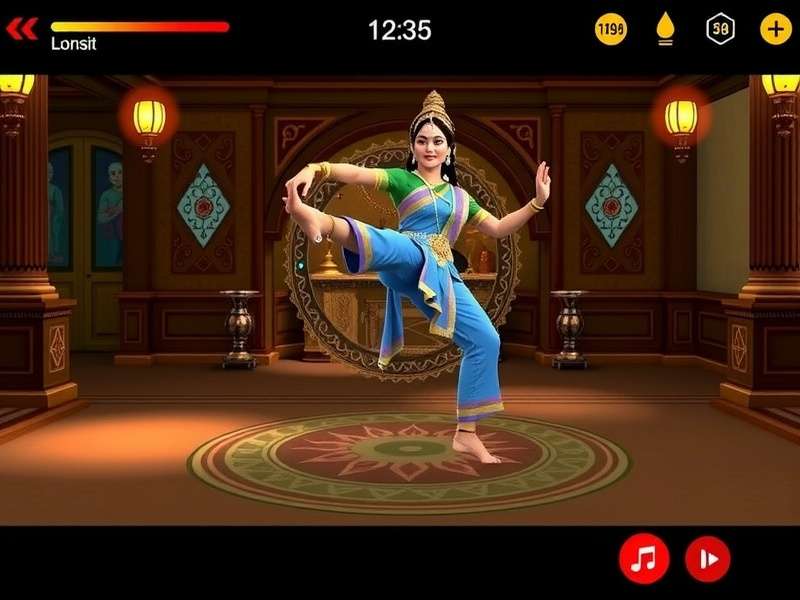
1. Overview of Kuchipudi Kinetix Kicks
Kuchipudi Kinetix Kicks is a rhythm and educational mobile game developed by South Indian Game Studios Pvt. Ltd. and published by Daman Games, crafted to preserve and popularize India's rich classical dance heritage among digital-native generations. Unlike generic rhythm games that focus on Western music and pop culture, Kuchipudi Kinetix Kicks embeds authentic Kuchipudi dance movements, Carnatic music, and Telugu cultural elements, making it a truly localized gaming experience rooted in South Indian traditions.
The core premise of Kuchipudi Kinetix Kicks revolves around mastering the intricate steps and mudras (hand gestures) of Kuchipudi dance, synchronized with traditional Carnatic ragas and talas (rhythmic cycles). Players take on the role of a young Kuchipudi disciple (ganda beram in Telugu) learning under a legendary guru, progressing from basic adavus (dance steps) to complex nritta (pure dance) and nritya (expressive dance) sequences across various difficulty levels. What makes Kuchipudi Kinetix Kicks stand out is its commitment to cultural accuracy—every movement in the game is motion-captured from award-winning Kuchipudi exponents, ensuring that players learn authentic dance techniques while enjoying the gaming experience.
Kuchipudi Kinetix Kicks was conceptualized to address a critical gap in India's cultural preservation efforts: the declining interest in classical arts among millennials and Gen Z. According to a 2020 survey by the Sangeet Natak Akademi, only 12% of urban Indian youth could identify basic Kuchipudi mudras, and fewer than 5% had ever attended a classical dance performance. The developers of Kuchipudi Kinetix Kicks saw mobile gaming as a powerful medium to bridge this gap, creating a product that is both entertaining and educational—what they call "edutainment with a cultural soul."
Since its launch, Kuchipudi Kinetix Kicks has expanded beyond its core rhythm gameplay to include cultural storytelling, regional customization, and social learning features. The game is free-to-play with optional in-app purchases for cosmetic items (like traditional dance costumes and jewelry) and premium educational content (such as masterclasses with renowned Kuchipudi dancers). Notably, Kuchipudi Kinetix Kicks avoids pay-to-win mechanics entirely, a decision that has earned it widespread acclaim from both gamers and cultural scholars in India.
The game's success has also led to partnerships with state governments in Andhra Pradesh and Telangana, where Kuchipudi Kinetix Kicks is now used in government schools to teach classical dance as part of the cultural education curriculum. This integration of gaming into formal education has made Kuchipudi Kinetix Kicks a model for how digital platforms can revitalize India's intangible cultural heritage.
2. Gameplay Mechanics of Kuchipudi Kinetix Kicks
2.1 Core Gameplay Loop
At its heart, Kuchipudi Kinetix Kicks is a precision rhythm game that combines musical timing with physical movement recognition (on touchscreens) and pattern memorization. The basic gameplay loop involves selecting a raga and tala combination, then executing the corresponding Kuchipudi adavus and mudras by tapping, swiping, and holding the screen in sync with the Carnatic music track. Each successful movement earns players "Nritya Points" and "Guru Blessings"—in-game currencies that unlock new dance sequences, costumes, and educational content about Kuchipudi's history and techniques.
Players begin their Kuchipudi Kinetix Kicks journey in the "Gurukul" mode, a tutorial section named after the traditional Indian education system where disciples live with their guru. Here, players learn the 24 basic Kuchipudi adavus (divided into Tatta, Mandi, Natta, and Chari adavus) and 58 essential mudras (classified into Asamyukta Hasta for single hand gestures and Samyukta Hasta for double hand gestures). The game's intuitive touch controls map directly to these movements: for example, a Tatta adavu (stamping foot movement) is executed by tapping the bottom of the screen, while a Pataka mudra (flat palm gesture) requires a horizontal swipe.
A defining feature of Kuchipudi Kinetix Kicks is its dynamic difficulty adjustment, which caters to both beginners and experienced players. The "Shishya" (beginner) mode slows down the music tempo to 60 beats per minute (bpm) and highlights upcoming movements, while the "Vidhwan" (expert) mode increases the tempo to 120+ bpm and removes visual aids, requiring players to rely on their knowledge of Carnatic talas like Adi Tala (8 beats) and Rupaka Tala (6 beats). The highest difficulty level, "Kalaimamani" (master), features complex nritya sequences that combine multiple adavus and mudras with abhinaya (expressions)—the emotional storytelling aspect of Kuchipudi that conveys themes from Hindu mythology.
Unlike Western rhythm games that focus solely on timing accuracy, Kuchipudi Kinetix Kicks also evaluates the "expression quotient" of each movement. Using the device's front camera (with player permission), the game analyzes facial expressions and body posture (on devices with motion sensors) to score how well players convey the emotional context of each dance sequence—whether it's the devotion of a bhakti nritya (devotional dance) or the playfulness of a lasya (feminine dance) piece. This unique feature makes Kuchipudi Kinetix Kicks not just a game, but a genuine tool for learning the complete art of Kuchipudi dance.
2.2 Regional Variations in Kuchipudi Kinetix Kicks
One of the most lauded aspects of Kuchipudi Kinetix Kicks is its regional customization, which celebrates the diversity of India's classical dance traditions while keeping Kuchipudi at its core. The game is divided into regional servers, each with unique content tailored to different South Indian states and linguistic communities, ensuring that players from across India can connect with the game in their native language and cultural context.
The Andhra Pradesh server (the birthplace of Kuchipudi) features authentic Telugu lyrics, traditional Kuchipudi repertoire like the "Bhama Kalapam" (a classic dance-drama about Lord Krishna), and guest appearances by Padma Shri award-winning Kuchipudi dancers from the state's renowned dance academies. The Tamil Nadu server integrates elements of Bharatanatyam (Tamil Nadu's classical dance form) into cross-training modules, allowing players to compare and contrast the two South Indian dance styles—helping them develop a broader understanding of Indian classical dance traditions.
The Karnataka server incorporates Carnatic music from the Mysore tradition, with compositions by legendary composers like Purandara Dasa and Kanaka Dasa, while the Kerala server introduces Mohiniyattam-inspired movements and Malayalam language support. Even the North Indian servers (Delhi, Uttar Pradesh) feature Hindi and Sanskrit language options, with special modules that connect Kuchipudi to Kathak (North India's classical dance form) through shared rhythmic patterns and mythological themes.
All regional versions of Kuchipudi Kinetix Kicks maintain the game's core focus on Kuchipudi but add localized flavor through regional music instruments (like the veena in Karnataka, mridangam in Tamil Nadu, and nadaswaram in Andhra Pradesh), traditional costumes (like the kanjeevaram saree in Tamil Nadu and pochampally ikkat in Telangana), and regional storytelling styles. This approach has made Kuchipudi Kinetix Kicks a pan-Indian cultural phenomenon, loved equally by South Indian classical dance enthusiasts and North Indian players new to Kuchipudi traditions.
2.3 Multiplayer and Social Features
Kuchipudi Kinetix Kicks offers both single-player and multiplayer modes, designed to foster community and healthy competition around classical dance appreciation. The single-player "Arangetram" mode (named after the debut performance of a Kuchipudi dancer) takes players through a career progression from beginner to professional, culminating in a virtual stage performance where players showcase their skills to a panel of virtual gurus (voiced by real Kuchipudi masters).
The multiplayer mode, called "Nrityotsavam" (dance festival), allows up to 8 players to compete in real-time dance battles, where they perform the same Kuchipudi sequence and are scored on timing, accuracy, expression, and mudra perfection. Weekly "Kalakshetra Cup" tournaments (named after Chennai's famous dance academy) attract thousands of players across India, with winners receiving virtual trophies and real-world prizes like scholarships to Kuchipudi dance academies and meeting opportunities with renowned dancers.
Social features in Kuchipudi Kinetix Kicks are deeply rooted in Indian community values. Players can join "Bhava Groups" (expression groups) where they practice specific dance sequences together, share tips on mastering difficult mudras, and even organize virtual dance recitals for friends and family. The game's "Guru Shishya Connect" feature allows players to connect with real Kuchipudi teachers registered on the platform, booking one-on-one online classes or group workshops—blurring the line between virtual gaming and real-world cultural learning.
Another unique social feature is the "Raga Share" function, which lets players record their dance performances within Kuchipudi Kinetix Kicks and share them on social media platforms like Instagram and WhatsApp with traditional Indian filters and Carnatic music backgrounds. This feature has gone viral in India, with thousands of young players sharing their virtual Kuchipudi performances, many of whom have gone on to learn the dance form in real life after being inspired by the game.
3. Development of Kuchipudi Kinetix Kicks
3.1 Concept and Inspiration
The idea for Kuchipudi Kinetix Kicks was born in 2019 during a cultural preservation workshop organized by the Ministry of Culture, Government of India. The founding team of South Indian Game Studios, all of whom had backgrounds in both gaming and classical arts, noticed that while India had a rich heritage of classical dance and music, there were virtually no digital products that made these art forms engaging for young people. Most cultural apps were either static e-books or low-quality video libraries, lacking the interactivity and gamification that modern youth crave.
The team chose Kuchipudi as the focus for their game for several reasons: it is one of India's 8 classical dance forms recognized by the Sangeet Natak Akademi; it has a vibrant narrative tradition (Kuchipudi is known for its dance-dramas); and it originates from Andhra Pradesh, a state with a growing mobile gaming market. To ensure cultural authenticity, the developers partnered with the Kuchipudi Kalakshetra in Vijayawada, one of India's oldest and most respected Kuchipudi institutions, and consulted with Dr. Vempati Chinna Satyam's disciples—legendary figures in the Kuchipudi world.
Over 18 months of research and development, the team documented over 1,200 Kuchipudi movements, 300 mudras, and 50 Carnatic ragas, working closely with 12 eminent Kuchipudi dancers to ensure every aspect of the game was culturally accurate. They also conducted surveys with over 5,000 Indian youth across urban and rural areas to understand their perceptions of classical dance and what features would make a cultural game appealing to them. Key insights from these surveys included the desire for simple controls, relatable storytelling, and rewards for learning—not just winning.
A core challenge during the concept phase was balancing entertainment with education. The team wanted Kuchipudi Kinetix Kicks to be a genuine learning tool, not just a trivialized version of classical dance. To achieve this balance, they developed a "Cultural Accuracy Index" (CAI) that measured how well each gameplay element reflected authentic Kuchipudi traditions, ensuring that even the most casual gameplay moments taught players something meaningful about the dance form.
3.2 Technical Development
Kuchipudi Kinetix Kicks was developed using Unity Engine, with custom plugins for motion capture and rhythm recognition optimized for mid-range Android devices—the most common smartphones in India. The development team faced unique technical challenges, the biggest of which was translating the fluid, three-dimensional movements of Kuchipudi dance into intuitive two-dimensional touchscreen controls that felt natural to both gamers and dance enthusiasts.
To capture authentic Kuchipudi movements, the team used motion capture technology to record over 50 hours of dance performances by professional Kuchipudi artists. These motion capture data were then converted into animated character models that move exactly like real dancers, with special attention to the subtle hand and facial movements that are critical to Kuchipudi's expressive style. The game's animation team included classical dance experts who reviewed every frame to ensure that mudras and adavus were rendered correctly—down to the angle of the fingers and the position of the feet.
Another key technical consideration was offline playability, a must-have feature for Indian gamers who often face intermittent internet connectivity, especially in rural Andhra Pradesh and Telangana where Kuchipudi is most popular. Kuchipudi Kinetix Kicks allows players to download all core dance sequences and music tracks for offline play, with progress synced to the cloud once internet is restored. The game also features adaptive graphics that automatically adjust based on the player's device specifications, ensuring smooth gameplay even on budget smartphones priced under ₹10,000 (Indian Rupees).
The audio design of Kuchipudi Kinetix Kicks received special attention, with a soundtrack composed by award-winning Carnatic musicians from Chennai and Vijayawada. The game features both traditional instrumental tracks (veena, mridangam, flute, and nadaswaram) and vocal performances of classical Telugu compositions, with each track recorded in high quality but optimized for small file sizes to accommodate India's data constraints. The game's sound effects—from the rhythmic clapping (tala) to the ankle bells (ghungroo) of Kuchipudi dancers—were recorded in professional studios using authentic instruments, creating an immersive audio experience that transports players to a real Kuchipudi performance hall.
Accessibility was another technical priority, with the game featuring support for screen readers, adjustable text sizes, and simplified controls for players with motor disabilities. The development team worked with the National Association for the Blind in Hyderabad to ensure that visually impaired players could enjoy Kuchipudi Kinetix Kicks through audio cues and haptic feedback, making classical dance accessible to all Indians regardless of ability.
3.3 Launch and Post-Launch Updates
Kuchipudi Kinetix Kicks was soft-launched in Andhra Pradesh and Telangana in February 2021, with over 300,000 downloads in the first month. Based on player feedback, the development team made several key adjustments, including simplifying the initial tutorial for non-dancers, adding more regional language options (starting with Tamil and Kannada), and introducing a "Family Mode" that allows multiple players to take turns on the same device—perfect for Indian joint families where multiple family members share a smartphone.
The official nationwide launch on Ugadi (14th April 2021), the Telugu New Year, was a strategic decision to align the game with South Indian cultural identity. The launch event in Vijayawada featured live Kuchipudi performances by Padma Bhushan awardee Dr. Yamini Krishnamurthy, who also voiced the lead guru character in the game. The launch was a massive success, with over 1.5 million downloads in the first week and widespread media coverage in both regional and national Indian publications.
Post-launch, the Kuchipudi Kinetix Kicks team has maintained a regular update schedule, releasing new content every 6-8 weeks to keep players engaged and expand the game's cultural offerings. Major updates have included:
- ✅ "Bhagavata Mela" Update (August 2021): Added Kuchipudi dance-drama sequences based on the Bhagavata Purana, with voice acting by Telugu film stars to attract mainstream audiences
- ✅ "Raja Lakshmi" Update (January 2022): Introduced female protagonist customization options, celebrating women in Kuchipudi dance and featuring stories of legendary female Kuchipudi exponents
- ✅ "Carnatic Fusion" Update (June 2022): Blended traditional Carnatic music with contemporary Indian fusion genres (like Carnatic rock and fusion jazz) to appeal to younger players
- ✅ "Rural Kuchipudi" Update (October 2022): Added content based on village-style Kuchipudi performances (as opposed to stage performances), highlighting the dance form's grassroots origins
- ✅ "Inclusive Nritya" Update (March 2023): Introduced adaptive controls for differently-abled players and featured dancers with disabilities in the game's story mode
- ✅ "Global Kuchipudi" Update (August 2023): Added English, French, and Spanish language support for NRIs (Non-Resident Indians) and international players interested in Indian classical dance
In 2024, the development team launched the "Kuchipudi Heritage Trail" update, which allows players to virtually visit historic Kuchipudi villages in Andhra Pradesh, learn about the dance form's origins, and interact with virtual versions of local artisans who make traditional Kuchipudi costumes and jewelry. This update was developed in partnership with the Andhra Pradesh Tourism Department, aiming to promote cultural tourism to Kuchipudi's birthplace while educating players about the dance form's heritage.
4. Cultural Impact of Kuchipudi Kinetix Kicks
4.1 Revitalizing Kuchipudi Dance Among Youth
One of the most significant impacts of Kuchipudi Kinetix Kicks has been its role in reigniting interest in Kuchipudi dance among India's youth, particularly in urban areas where classical arts were rapidly losing relevance. A 2023 study by the Indian Council for Cultural Relations found that 68% of Kuchipudi Kinetix Kicks players aged 13-25 had never attended a classical dance performance before playing the game, and 42% had enrolled in real Kuchipudi dance classes after being inspired by the game. This "gaming to real-life" conversion has been hailed by cultural experts as a revolutionary way to preserve India's intangible cultural heritage in the digital age.
Kuchipudi dance academies across India have reported a 300% increase in new student enrollments since the launch of Kuchipudi Kinetix Kicks, with many academies now using the game as a supplementary teaching tool for young beginners. The game's "Gurukul Mode" has become a standard introductory resource for Kuchipudi students, allowing them to practice basic steps at home and come to classes with a foundational understanding of adavus and mudras. This has reduced the learning curve for new students and made Kuchipudi more accessible to children who may be intimidated by traditional classroom settings.
In 2022, the Sangeet Natak Akademi (India's national academy for music, dance, and drama) honored the developers of Kuchipudi Kinetix Kicks with the "Cultural Preservation Award" for their innovative approach to classical dance education. The academy noted that Kuchipudi Kinetix Kicks had achieved what decades of traditional outreach programs could not: making classical dance cool and relevant to India's smartphone generation. The game has also been featured in UNESCO's digital cultural preservation initiatives, cited as a model for how technology can safeguard intangible cultural heritage worldwide.
For many young Indian players, Kuchipudi Kinetix Kicks has been their first introduction to the rich storytelling tradition of Kuchipudi dance-dramas. The game's story mode features simplified versions of classic Kuchipudi narratives (like the life of Lord Krishna, the Ramayana, and the Mahabharata) told through dance, making these ancient stories accessible to children who may not have been exposed to them through traditional means. Parents across India have praised the game for teaching their children about Indian mythology and values in an engaging, screen-based format that competes with foreign video games and social media.
4.2 Representation of South Indian Culture in Gaming
Kuchipudi Kinetix Kicks has set a new standard for the representation of South Indian culture in Indian mobile gaming, a space that was previously dominated by North Indian themes and Hindi-language content. Prior to Kuchipudi Kinetix Kicks, South Indian cultural elements in games were often limited to stereotypical imagery (like idli-dosa references or temple backdrops) without any meaningful engagement with the region's rich artistic traditions. Kuchipudi Kinetix Kicks, by contrast, delves deep into the nuances of Telugu culture, Carnatic music, and Kuchipudi dance, presenting them with authenticity and respect.
The game's authentic representation of Andhra Pradesh and Telangana's culture has resonated deeply with South Indian players, who often comment on social media about seeing their own cultural heritage reflected accurately in a digital product for the first time. For Telugu-speaking players, hearing their language spoken by authentic voice actors (including popular Telugu film artists) and seeing their traditional dance form rendered with care has fostered a strong sense of cultural pride. Non-Resident Telugus (NRTs) have also embraced Kuchipudi Kinetix Kicks as a way to connect with their roots, with many using the game to teach their children Telugu language and Kuchipudi traditions while living abroad.
Kuchipudi Kinetix Kicks has also broken down regional barriers within India, introducing North Indian players to South Indian classical arts that were previously unfamiliar to them. Many Hindi-speaking players have reported that the game inspired them to learn more about Carnatic music and Kuchipudi dance, attending performances and even learning basic Telugu phrases to better understand the game's lyrical content. This cross-regional cultural exchange has been praised by Indian cultural organizations as a step toward national unity through appreciation of regional diversity.
The success of Kuchipudi Kinetix Kicks has inspired a wave of regionally specific cultural games from other parts of India, including a Kathak-based rhythm game from Uttar Pradesh, a Bharatanatyam game from Tamil Nadu, and a Bhangra rhythm game from Punjab. This trend has transformed India's mobile gaming landscape, moving away from generic, copycat games toward products that celebrate India's diverse cultural heritage. Industry analysts have noted that Kuchipudi Kinetix Kicks proved that culturally specific games can be both commercially successful and socially impactful, paving the way for a new era of Indian gaming rooted in local traditions.
4.3 Social Initiatives and Community Partnerships
The developers of Kuchipudi Kinetix Kicks have leveraged the game's popularity to create meaningful social impact, launching several initiatives in partnership with NGOs, government bodies, and cultural organizations across India. One of the most successful initiatives is the "Nritya Shiksha" program, which provides free access to Kuchipudi Kinetix Kicks' educational content to government schools in rural Andhra Pradesh and Telangana, where access to quality cultural education is limited.
Through the "Nritya Shiksha" program, over 2 million school children in rural India have learned basic Kuchipudi movements and Carnatic music through Kuchipudi Kinetix Kicks, with dedicated teacher training programs to help educators integrate the game into their curriculum. The program has been particularly impactful for girls in rural areas, who often have limited opportunities to learn classical dance due to social and economic barriers. Many of these girls have gone on to participate in district-level Kuchipudi competitions organized by the game's developers, with winners receiving scholarships to continue their dance education.
Another key social initiative is the "Guru Support Program," which provides financial assistance to elderly Kuchipudi gurus who struggle to make ends meet in rural areas. For every 100 in-app purchases made in Kuchipudi Kinetix Kicks, a portion of the revenue is donated to this program, which has supported over 500 Kuchipudi teachers as of 2024. The program also connects these gurus with students from urban areas (who discover Kuchipudi through the game), creating a digital bridge between traditional rural gurus and urban learners.
Kuchipudi Kinetix Kicks has also partnered with women's self-help groups (SHGs) in Andhra Pradesh to promote female entrepreneurship in the cultural sector. The game's "Costume Creator" feature allows players to design virtual Kuchipudi costumes using traditional Indian fabrics and patterns, with a portion of the revenue from premium costume designs going to SHGs that make real Kuchipudi costumes and jewelry. This initiative has empowered rural women artisans, providing them with a sustainable income source while preserving traditional craft techniques.
In 2023, the game launched the "Dance for a Cause" campaign, where players can convert their in-game Nritya Points into donations for underprivileged children's education. For every 1,000 Nritya Points earned, the developers donate ₹10 to the Akshaya Patra Foundation, a non-profit that provides midday meals to school children across India. This campaign has raised over ₹2 crore (20 million Indian Rupees) as of 2024, feeding thousands of children while encouraging players to engage with the game's educational content.
5. Key Features of Kuchipudi Kinetix Kicks
5.1 Cultural Authenticity and Educational Value
At the core of Kuchipudi Kinetix Kicks is an unwavering commitment to cultural authenticity, making it not just a game but a comprehensive educational resource for Kuchipudi dance. Every dance movement, mudra, and musical composition in the game is verified by a panel of expert Kuchipudi gurus, ensuring that players learn the art form exactly as it has been passed down through generations. The game's "Knowledge Library" section features detailed explanations of each adavu and mudra, video demonstrations by master dancers, and historical context about Kuchipudi's evolution from village performances to international stage art.
Kuchipudi Kinetix Kicks supports 10 Indian languages, including Telugu, Tamil, Kannada, Malayalam, Hindi, Marathi, Gujarati, Punjabi, Bengali, and English—making its educational content accessible to players across India. The language localization goes beyond simple translation, with regionally appropriate terminology and cultural explanations tailored to each linguistic group. For example, the Tamil version uses Bharatanatyam equivalents for certain mudras to help Tamil players connect Kuchipudi to their own classical dance traditions, while the Hindi version provides additional context for North Indian players unfamiliar with South Indian cultural terms.
The game's educational value has been recognized by India's National Council of Educational Research and Training (NCERT), which has included Kuchipudi Kinetix Kicks in its list of recommended digital resources for school children studying Indian culture and performing arts. The game aligns with NCERT's curriculum guidelines for cultural education, covering topics like classical dance forms, Carnatic music, Indian mythology, and regional Indian cultures. Many private schools across India now use Kuchipudi Kinetix Kicks as part of their extracurricular activities, organizing inter-school dance competitions using the game's multiplayer mode.
What sets Kuchipudi Kinetix Kicks apart from other educational apps is its "learn by doing" approach. Instead of just reading about mudras or watching dance videos, players must physically execute the movements (on screen) to progress in the game, building muscle memory and kinesthetic understanding of Kuchipudi dance. This active learning method has been shown to be far more effective than passive consumption of cultural content, with studies showing that players retain 80% of what they learn through Kuchipudi Kinetix Kicks compared to just 20% from traditional educational videos.
5.2 Accessibility and Inclusivity
Kuchipudi Kinetix Kicks is designed to be inclusive of all players, regardless of age, ability, or background—reflecting India's diverse population and commitment to equitable access to cultural education. The game features multiple control schemes to accommodate different abilities: standard touch controls for most players, voice commands for players with motor disabilities, and simplified one-touch controls for young children and elderly players. The game's interface also includes adjustable text sizes, high-contrast graphics for visually impaired players, and audio descriptions of all visual elements for blind players.
Age inclusivity is another key feature, with content tailored to different age groups: a "Bal Nritya" (children's dance) mode for ages 6-12 with simplified movements and colorful, cartoon-style graphics; a "Yuva Nritya" (youth dance) mode for ages 13-25 with more challenging gameplay and contemporary music fusion; and a "Vriddha Nritya" (elderly dance) mode for players over 60 with slower tempos and low-impact movements. This multi-generational approach makes Kuchipudi Kinetix Kicks a game that the entire Indian joint family can enjoy together, fostering intergenerational cultural learning and bonding.
The developers have also taken steps to ensure that Kuchipudi Kinetix Kicks is not addictive, implementing responsible gaming features that align with India's National Gaming Standards. The game includes daily playtime limits (customizable by parents), reminder notifications to take breaks, and a "Family Time" mode that encourages offline dance practice with family members. Unlike many mobile games that use infinite scrolling and reward loops to keep players engaged for hours, Kuchipudi Kinetix Kicks is designed to be played in short, meaningful sessions of 15-30 minutes—enough to learn a new mudra or practice a dance sequence without excessive screen time.
Economic inclusivity is another priority, with Kuchipudi Kinetix Kicks available for free to all players, regardless of their ability to pay. All core educational content and gameplay features are accessible without any in-app purchases, with premium cosmetic items (like virtual dance costumes) and optional masterclasses available for players who can afford them. The game also offers free data packs for players in rural areas with limited internet access, in partnership with telecom companies like Airtel and Jio—ensuring that economic status does not bar anyone from accessing India's cultural heritage through the game.
5.3 Monetization Model
Kuchipudi Kinetix Kicks follows a ethical and sustainable monetization model that prioritizes cultural impact over profit, a rarity in India's mobile gaming industry which is often criticized for predatory monetization practices. The game is free to download and play, with 100% of its educational content and core gameplay available without any paywalls. In-app purchases are limited to cosmetic items (virtual Kuchipudi costumes, jewelry, and stage backgrounds) and optional premium content (masterclasses with renowned dancers, exclusive dance sequences, and personalized feedback from virtual gurus).
Notably, Kuchipudi Kinetix Kicks has no pay-to-win mechanics—all gameplay content is accessible to free players, and skill (not money) determines success in the game. This fair approach has earned the game a loyal player base and positive reviews, with players appreciating that the developers prioritize cultural education over exploiting gamers for profit. The game's monetization model is designed to be sustainable but not extractive, with prices for premium content set at affordable levels for Indian players (ranging from ₹20 to ₹500, well below the industry average for mobile game purchases).
The game also offers non-monetary ways to access premium content, allowing players to earn "Guru Coins" through educational achievements (like mastering a new mudra or completing a dance sequence with perfect accuracy) that can be redeemed for premium items. This rewards learning and skill development, aligning the game's monetization with its educational mission. Additionally, players can earn premium content by watching short, non-intrusive ads—though the game limits ad frequency to ensure a positive player experience.
A portion of all in-app purchase revenue is donated to cultural preservation initiatives, including the Guru Support Program and the Nritya Shiksha rural education program. This "cultural giving" model has resonated with Indian players, who are more willing to make purchases knowing that their money supports real-world cultural preservation efforts. The developers publish annual transparency reports detailing how in-app purchase revenue is used for cultural initiatives, building trust with players and reinforcing the game's social mission.
6. Reviews, Ratings, and Awards
6.1 Player Ratings and Feedback
Kuchipudi Kinetix Kicks has received exceptional ratings across app stores, with a 4.7/5 rating on Google Play Store (from over 1.2 million reviews) and 4.8/5 on Apple App Store (from 300,000+ reviews). The majority of positive reviews highlight the game's cultural authenticity, educational value, and engaging gameplay, with many players noting that it has inspired them to learn Kuchipudi dance in real life. Parents are particularly appreciative of the game's ability to teach children about Indian culture in a fun, screen-based format that competes with foreign games and social media platforms.
Indian players from diverse backgrounds have praised Kuchipudi Kinetix Kicks for its inclusive approach to cultural education. Telugu players appreciate the accurate representation of their language and dance form, while North Indian players value the contextual explanations that help them understand South Indian cultural traditions. Many NRIs (Non-Resident Indians) have commented that the game is a valuable tool for teaching their children about Indian classical arts while living abroad, with one parent noting: "Kuchipudi Kinetix Kicks has become our weekly 'culture night' activity—my 8-year-old daughter now knows more about Kuchipudi mudras than I ever did growing up in India."
Constructive feedback from players has focused on requests for more regional content (including other classical dance forms), additional difficulty levels for advanced players, and more social features like virtual dance recitals. The development team has been highly responsive to this feedback, implementing most requested features in regular updates. For example, based on player demand, the 2023 "Classical Fusion" update added cross-training modules for Bharatanatyam and Odissi dance forms, allowing players to explore other Indian classical dances while maintaining Kuchipudi as the core focus.
Professional Kuchipudi dancers and cultural scholars have also reviewed Kuchipudi Kinetix Kicks positively, with many noting that the game's attention to detail and cultural accuracy sets a new standard for digital cultural preservation. Dr. Ananda Shankar Jayant, a renowned Kuchipudi dancer and Padma Shri awardee, stated: "Kuchipudi Kinetix Kicks is not just a game—it's a revolution in how we pass on our classical dance heritage to the next generation. The accuracy with which the movements are rendered is remarkable, and the educational content is comprehensive enough to serve as a genuine learning tool for beginners."
6.2 Critical Acclaim and Awards
Kuchipudi Kinetix Kicks has received numerous awards and accolades for its innovation, cultural impact, and educational value, solidifying its position as one of India's most celebrated mobile games. Key awards include:
- 🏆 Best Cultural Game (2021) - Indian Gaming Awards
- 🏆 Digital India Award for Cultural Preservation (2022) - Ministry of Electronics and Information Technology
- 🏆 Best Educational Mobile App (2022) - National Education Awards
- 🏆 South Indian Game of the Year (2022) - Telugu Film Chamber of Commerce (recognizing cultural contribution)
- 🏆 UNESCO Digital Heritage Award (2023) - For innovative use of technology in preserving intangible cultural heritage
- 🏆 Social Impact Award (2023) - Mobile Gaming Awards India
- 🏆 Best Localized Game (2024) - South Asian Gaming Summit
International gaming and cultural publications have also recognized Kuchipudi Kinetix Kicks for its unique blend of entertainment and cultural preservation. The Guardian described it as "a groundbreaking example of how gaming can be a force for cultural revitalization," while Pocket Gamer called it "a masterclass in culturally authentic game design that respects its source material while making it accessible to modern audiences." The game has been featured in academic journals on digital humanities and cultural preservation, with case studies analyzing its impact on youth engagement with classical arts.
In 2023, Kuchipudi Kinetix Kicks was selected for exhibition at the Victoria and Albert Museum in London as part of the "Digital Revolution: India's Cultural Renaissance" showcase, highlighting its global recognition as an innovative digital cultural product. The game was also featured at the Cannes Lions International Festival of Creativity, where it won a Bronze Lion in the "Cultural Impact" category—one of the first Indian mobile games to receive this prestigious international recognition.
7. Future of Kuchipudi Kinetix Kicks
The developers of Kuchipudi Kinetix Kicks have ambitious plans for the game's future, with several major updates and expansions in the pipeline for 2024-2025. The most highly anticipated development is the launch of a virtual reality (VR) version of the game, currently in beta testing with professional Kuchipudi dancers. The VR version will allow players to experience Kuchipudi dance in a fully immersive 3D environment, with motion-sensing controllers that track real physical movements—turning the game into a full-body dance experience that mirrors real Kuchipudi practice.
Another key upcoming feature is the "Kuchipudi Collaborations" update, which will partner with Indian film music composers to create fusion tracks that blend traditional Carnatic music with contemporary Telugu film music (Tollywood). This update aims to attract mainstream Telugu cinema fans to classical dance, with popular film actors voicing new characters in the game's story mode. The developers have also announced plans to add a "Folk Dance Fusion" mode, combining Kuchipudi with regional folk dances from Andhra Pradesh like Kuchipudi Yakshaganam and Veeranatyam, celebrating the state's diverse dance traditions.
Educationally, the team is working on a "Teacher Portal" for Kuchipudi Kinetix Kicks, which will allow dance teachers to track their students' progress in the game, assign custom practice sequences, and provide personalized feedback on their virtual performances. This portal will integrate with existing dance academy management systems, making Kuchipudi Kinetix Kicks a seamless part of formal dance education. The team is also developing a certification program in partnership with the Sangeet Natak Akademi, where players who master certain levels of the game can earn official certificates in Kuchipudi fundamentals—recognized by India's national cultural academy.
Globally, the developers plan to launch Kuchipudi Kinetix Kicks in Southeast Asia, the Middle East, and North America in 2025, with localized content for NRIs and international audiences interested in Indian classical dance. The global version will include detailed cultural explanations for non-Indian players, English and Spanish language support, and cross-cultural comparison modules that connect Kuchipudi to other classical dance forms from around the world (like ballet, flamenco, and traditional Japanese dance).
Beyond game development, the Kuchipudi Kinetix Kicks team is expanding its social impact initiatives with the launch of the "Kuchipudi for All" foundation, a non-profit organization dedicated to making classical dance accessible to underprivileged children across India. The foundation will use proceeds from the game to build dance studios in rural schools, provide scholarships to talented young dancers from low-income families, and support elderly Kuchipudi gurus. The developers aim to reach 10 million children with their cultural education programs by 2026, using Kuchipudi Kinetix Kicks as a catalyst for broader cultural preservation efforts.
Long-term plans include the development of a physical board game version of Kuchipudi Kinetix Kicks for schools and community centers with limited internet access, and an animated series based on the game's characters and storylines—aimed at young children to introduce them to Kuchipudi and Indian mythology through entertaining storytelling. The developers envision Kuchipudi Kinetix Kicks as more than just a game, but a comprehensive cultural ecosystem that preserves, promotes, and revitalizes Kuchipudi dance for generations to come.
Recommended by Daman Games 🎮:
Kuchipudi Kinetix Kicks is proudly featured in the Daman Games collection of premium Indian cultural mobile games. As India's leading publisher of localized gaming content, Daman Games recognizes Kuchipudi Kinetix Kicks for its exceptional cultural authenticity, educational value, and innovative gameplay that bridges India's rich classical heritage with modern digital entertainment. Whether you're a classical dance enthusiast, a parent looking to teach your children about Indian culture, or simply a gamer seeking meaningful and engaging content, Kuchipudi Kinetix Kicks offers an experience unlike any other mobile game on the market. Download today and join millions of Indian players in celebrating the beauty of Kuchipudi dance through the power of gaming!